
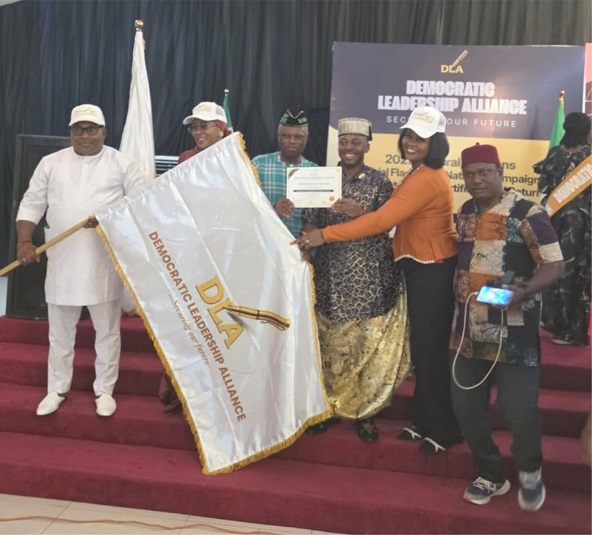
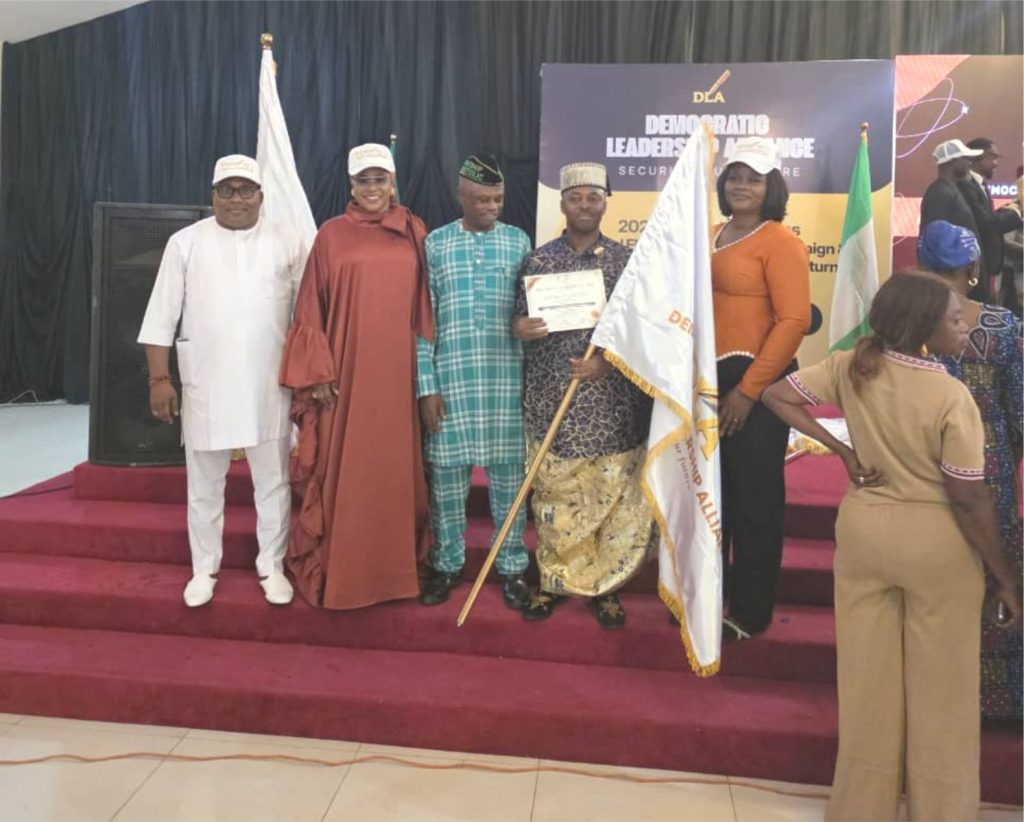
 The presentation of Certificates of Return to the Democratic Leadership Alliance (DLA) candidates from Akwa Ibom State in Abuja on Thursday October 15, 2026, marks another milestone in the party’s preparations for the 2027 general elections. Beyond the ceremony and the symbolism of receiving certificates to contest elections, the occasion raises a fundamental question about the future of Akwa Ibom State on how political leadership can translate electoral ambitions into prosperity, inclusion and meaningful development for the people.
Led by the DLA governorship candidate, Obong Jeremiah Akpan, who is also the progenitor of Ini Uforo Ndito Akwa Ibom 2027, the Akwa Ibom contingent included candidates seeking elective offices across the state. Among them were the Uyo Senatorial District candidate, Dr. Ambassador Princess Victoria Ibokette; the Itu/Ibiono Ibom Federal Constituency candidate, Mrs. Mfon Peter, Ikot Abasi/Mkpat Enin/Eastern Obolo, Sir Kingsley Udoh alongside other candidates of the party.
The message delivered by the National Chairman of the DLA, Barr Samuel Memeh, urging the candidates to return to the grassroots and seek the acceptance and votes of the people, deserves serious reflection. Elections are not won through ceremonies, titles, declarations or the distribution of certificates alone. In a democracy, the ultimate source of political authority is the electorate. The people must therefore remain the principal consideration in every political calculation.
For too long, political discourse in Nigeria has often placed greater emphasis on the acquisition of power than on the responsibilities that accompany it. Candidates make promises during election campaigns, but the real test of leadership begins when those promises must be translated into policies, projects and programmes that improve the lives of ordinary citizens. Akwa Ibom State must not be an exception to this principle. It is against this background that the message of Ini Uforo Ndito Akwa Ibom 2027, as championed by Obong Jeremiah Akpan invites attention. The slogan, which conveys the idea of a time for Akwa Ibom people to prosper, presents an opportunity to focus public debate on the meaning of prosperity and the practical steps required to achieve it.
Prosperity cannot be measured solely by the number of roads constructed, government buildings erected or official ceremonies conducted. These may be important components of development, but the ultimate measure of governance must include the quality of life of the people. Can young people find decent employment? Can small business owners access the opportunities and support they need to grow? Can farmers obtain the necessary inputs and markets for their produce? Can families afford basic healthcare and education? Can rural communities enjoy essential infrastructure and economic opportunities comparable to those available in urban centres?
These are among the questions that should guide every serious political campaign in Akwa Ibom State. Obong Jeremiah Akpan’s decision to dedicate his Certificate of Return to the downtrodden, the voters and those he described as abandoned and neglected by successive governments adds a social dimension to his political message. His inclusion of concerned members of the elite who are willing to support the cause also suggests an appeal for a broad coalition of citizens around the objective of development.
However, the dedication of a certificate, meaningful as a political statement may be, must ultimately be matched by a clear commitment to public service. The disadvantaged do not merely need to be remembered during election campaigns; they need policies that address poverty, unemployment, inadequate infrastructure and limited access to economic opportunities. They need institutions that respond to their concerns and leaders who remain accessible after elections.
If Ini Uforo Ndito Akwa Ibom 2027 is to become more than a campaign slogan, its advocates must explain how the proposed vision of prosperity would be achieved. What economic policies would create jobs? How would local businesses be strengthened? What practical measures would improve education, healthcare, agriculture, transportation and rural development? How would the state maximise its maritime potential, develop its blue economy and expand opportunities for its young population?
These are not questions for the DLA alone. They are questions that every political party and candidate seeking the mandate of Akwa Ibom voters should be prepared to answer.
The presence of candidates for the governorship, Senate, House of Representatives and State House of Assembly also highlights the importance of coordinated governance. Development cannot be sustained when elected officials work at cross-purposes or treat their respective offices as isolated platforms for political advancement. The state needs representatives who understand that their responsibilities differ constitutionally but converge around the welfare and development of the people.
A governor must provide effective executive leadership, senators and members of the House of Representatives must contribute to sound legislation and effective representation at the federal level, while members of the State House of Assembly must exercise their legislative and oversight responsibilities diligently. When these institutions work effectively and remain accountable to the electorate, citizens stand to benefit.
Equally important is the need for issue-based campaigns. The call by the DLA National Chairman for candidates to return to the grassroots should not be interpreted merely as an instruction to mobilise supporters. It should be an invitation to listen. Communities must have the opportunity to explain their needs, challenge campaign promises and demand realistic commitments from those seeking their votes.
Grassroots engagement must therefore extend beyond rallies and political meetings. It should involve direct interaction with farmers, traders, artisans, students, professionals, women, young people, traditional institutions and community leaders. Their concerns should inform campaign programmes and where a party wins an election, shape the priorities of governance.
Akwa Ibom’s political future should not be reduced to the rivalry of personalities or the competition among political parties. Political competition is a legitimate feature of democracy, but it becomes more meaningful when it produces better ideas, stronger institutions and more responsive leadership. The DLA and its candidates now have an opportunity to demonstrate the substance behind their message. The certificates received in Abuja confer no automatic mandate to govern; they represent a step in the process of seeking the people’s approval. The electorate must ultimately decide whom to entrust with public responsibilities, based on the candidates’ records, proposals, character and capacity to serve.
Any party seeking to govern the state must therefore recognise the rights and interests of those who support it and those who choose differently. The true significance of Ini Uforo Ndito Akwa Ibom 2027 will depend on whether the promise of prosperity can be translated into a credible programme that places people above political interests. The slogan must become a framework for measurable commitments, transparent governance, equitable development and accountability.
As the 2027 general elections approach, Akwa Ibom voters deserve campaigns that offer more than rhetoric. They deserve clear policy proposals, honest engagement and candidates who understand that public office is a responsibility entrusted by the people, not a personal entitlement. The DLA’s presentation of Certificates of Return in Abuja has opened another chapter in its political journey. What follows should be a sustained conversation with the people about the future they desire and the practical measures required to achieve it.
Ultimately, the promise of Ini Uforo Ndito Akwa Ibom 2027 must be judged not by the enthusiasm surrounding its launch, but by the seriousness of the commitments made in its name. The prosperity of the people of Akwa Ibom must be measured by the opportunities available to its people, the dignity of their lives and the extent to which governance responds to their needs. That is the standard against which every candidate, every party and every political promise should be examined as Akwa Ibom prepares for 2027.