
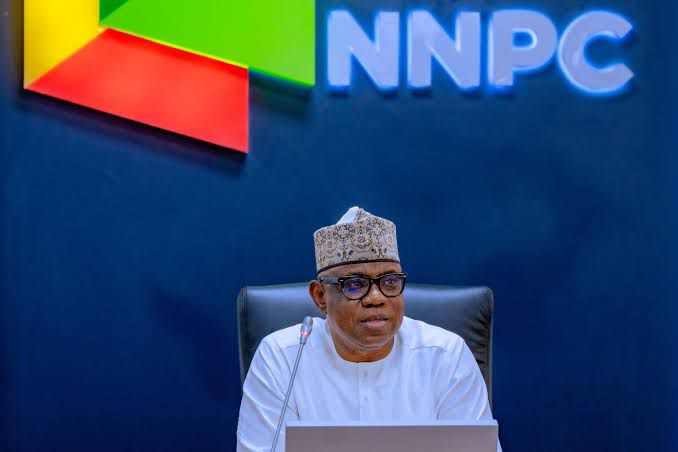
…Says NNPC lacks capacity to run refineries profitably …’ Nigerians should thank God for Dangote Refinery’
The Nigerian National Petroleum Company Limited (NNPC Ltd.) has said it shut down the $1.5 billion-rehabilitated Port Harcourt Refinery, after internal reviews exposed “monumental losses” and value destruction.
The group CEO of NNPC, Bayo Ojulari, who disclosed this on Wednesday, described the Port Harcourt Refinery’s brief reopening in November 2024—after nearly three years of work under former GCEO Mele Kyari—as a “huge waste of resources.” The plant halted again in May 2025 amid relentless financial bleeding, despite monthly crude supplies.
Speaking at a Fireside Chat on Securing Nigeria’s Energy Future during the Nigeria International Energy Summit (NIES 2026) in Abuja, Ojulari said, “When we came in, refineries were a hot topic. Nigerians were angry… But after a detailed review, it became clear that we were simply wasting money,” Ojulari said.
“We were pumping cargo every month into the refineries. Utilisation was around 50–55 per cent… We were spending a lot on operations and contractors, but the net outcome was leaking value with no clear line of sight to profitability.”
He admitted that NNPC lacked the capacity to run refineries profitably, citing a structural flaw: an over focus on financing and engineering, procurement, and construction (EPC), with neglect of long-term operations and maintenance (O&M). “Financing, EPC, and O&M contracts all extract value without skin in the game. That system was designed for taking, not sustaining,” he said. To “stop the rot,” NNPC halted operations despite political pressure, producing only mid-grade products that destroyed crude value. “That trajectory would have meant value destruction for the next 30 years. We were not going to do that,” Ojulari stated.
He revealed that the NNPC’s board had approved a shift to equity partnerships with proven refinery operators, who would take stakes, lead operations, and build local capacity for self-financing plants. “We are not looking for contractors or O&M providers. We are looking for an entity that actually runs refineries,” he said. “We are not selling Nigeria; we are selling down equity where necessary to secure a sustainable refinery that runs like a business.”
Discussions are advanced, including with a major Chinese petrochemical firm, which is conducting site inspections soon. Ojulari credited Dangote Refinery for vital “breathing space,” strengthening NNPC collaboration while upholding its supplier-of-last-resort role. “Whether you love Dangote or hate him, thank God for the Dangote Refinery. It is working, it is in Nigeria. Thank God he is a Nigerian and not someone from another continent.
”On oil production, he projected 1.8 million barrels per day (bpd) in 2026, calling the federal government’s 2025 budget benchmark of 2.06 million bpd overambitious after last year’s 1.7 million bpd average. One of the financial problems Nigeria faced last year was overprojection… That has far-reaching consequences,” he warned, stressing realistic planning under the crude-for-naira policy.
Ojulari said his leadership team moved swiftly to understand the state of the refineries amid public outrage over years of heavy investment and persistent underperformance. “When we came in, refineries were a hot topic. Nigerians were angry, expectations were very high, and we were under extreme pressure. But after a detailed review, it became clear that we were simply wasting money,” he said.
Ojulari, who admitted his professional background is in upstream operations, said he and his team were forced onto a “vertical learning curve” to understand downstream challenges.
Speaking on the NNPC’s new strategies, he disclosed that it would bring in experienced refinery operators as equity partners rather than contractors, adding that under the plan, such partners would acquire stakes in the refineries, lead operations, and help rebuild local technical capacity. “We are not selling Nigeria, we are selling down equity where necessary to secure a sustainable, self-financing refinery that runs like a business,” Ojulari clarified.
He confirmed that discussions are already underway with potential investors, including a major Chinese petrochemical company, with site inspections expected shortly. On crude-for-naira policy and domestic supply, Ojulari said NNPC remained committed to ensuring product availability as a priority, noting that pricing would stabilise naturally once supply gaps are closed
(LEADERSHIP)