
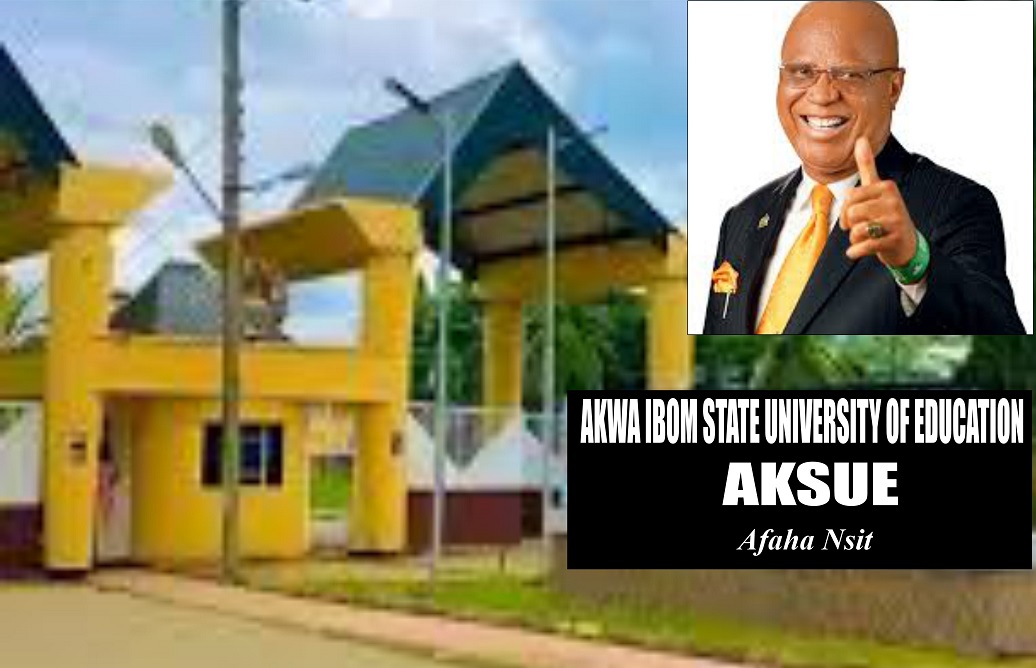
With Saviour Ekpe, Ph.D
The establishment of the Akwa Ibom State University of Education (AKSUE) presents a rare opportunity for the state to create not just another tertiary institution, but a centre of excellence capable of producing the teachers, researchers, educational administrators and innovators who will shape the future of education in Nigeria and beyond.
Across the world, the most successful universities of education are distinguished not merely by their physical infrastructure (though very important), but by deliberate government investment, strong partnerships with schools, intensive teacher training, educational research and the integration of technology into learning. If Akwa Ibom State (being an oil-rich state) is to build a university that can compete with leading institutions in America, Europe and other parts of Africa, it must adopt a long-term strategy anchored on global best practices.
In Africa, the University of Education, Winneba in Ghana has grown into one of the continent’s most respected teacher education institutions through a clear mandate focused on teacher preparation, educational research and policy development. The university has become a national asset because successive governments invested in its expansion, research capacity and specialized programmes for teacher development.
In the United States for instance, institutions such as Bank Street College of Education have built their reputation on a model that combines academic learning with extensive classroom practice, research and partnerships with schools and communities. Their programmes ensure that future teachers spend substantial time in real classroom environments while receiving mentorship from experienced educators.
In a similar vein, Teachers College, Columbia University has maintained global relevance by investing heavily in educational research, doctoral programmes and the training of educational leaders capable of influencing policy and practice. In Finland, whose education system is consistently regarded among the best in the world, teacher education institutions place enormous emphasis on practical teaching experience. Universities operate teacher-training schools where student teachers practice under close supervision before graduation. The system ensures that graduates are fully prepared for the realities of the classroom.
For Akwa Ibom State University of Education to attain comparable standards, the administration of Governor Pastor Umo Eno must move beyond conventional university development models.
First, the state government should establish demonstration primary and secondary schools directly attached to the university. These schools should serve as laboratories for teacher training, educational research and curriculum innovation. Every education student should be required to undergo continuous supervised teaching practice (TP) within these schools before graduation.
Second, government must invest substantially in educational technology. Modern classrooms should be equipped with smart boards, digital laboratories, virtual learning platforms and artificial intelligence-assisted teaching tools. The future teacher must be trained for digital education, not merely traditional chalkboard instruction.
Third, the university should become a centre for educational research and policy development. A dedicated Institute for Educational Research and Innovation should be established to conduct studies on learning outcomes, curriculum development, teacher effectiveness and educational reforms. Such a centre would provide evidence-based recommendations to government on improving primary and secondary education across the state.
Fourth, international partnerships should be aggressively pursued. Memoranda of understanding with institutions in Ghana, Finland, the United States and other advanced educational systems would facilitate staff exchanges, collaborative research, joint conferences and postgraduate training opportunities. Exposure to global best practices would accelerate the institution’s growth.
Fifth, the state should embark on a deliberate programme of faculty recruitment and development. World-class universities are built by world-class academics. Competitive remuneration packages, research grants and sponsorship for doctoral and postdoctoral studies would help attract and retain highly qualified scholars.
Sixth, entrepreneurship and skills development should be integrated into teacher education. Modern teachers must possess competencies beyond classroom instruction. Programmes in educational technology, educational management, curriculum design, creative industries and vocational education should be strengthened to improve graduate employability.
Seventh, government should establish a special intervention fund dedicated to the university’s growth over the next decade. Sustainable funding remains the foundation upon which all successful universities are built. Infrastructure, research, staff development and innovation cannot flourish without consistent financial commitment.
Furthermore, the university should be designed as a regional hub for continuous teacher professional development. Thousands of teachers across Akwa Ibom and neighbouring states should be able to access regular training, certification and refresher programmes through the institution. This would expand its influence beyond degree-awarding functions and position it as a driver of educational transformation.
The success of the Akwa Ibom State University of Education should not be measured merely by the number of students admitted or buildings constructed. Rather, its success should be judged by the quality of teachers it produces, the research it generates, the innovations it introduces into the education sector and its contribution to national development.
Pastor Umo Eno’s administration has the opportunity to create an institution that could become for Nigeria what the University of Education, Winneba is for Ghana, what Finland’s teacher training universities are for Europe and what leading education colleges are for the United States. Achieving this vision will require strategic investment, strong political will and a commitment to excellence. If pursued diligently, the Akwa Ibom State University of Education could emerge as one of Africa’s foremost centres for teacher education and educational research within the next decade.
Dr Sviour Ekpe is a journalist, media professional, communication expert, public analyst and scholar and can be reached though newsfrontmail@gmail.com