
With Saviour Ekpe, Ph.D
The ongoing discourse on the establishment of a dedicated Ministry of Blue Economy in Akwa Ibom State remains both timely and strategic. It is a conversation rooted in foresight—one that recognizes the immense wealth embedded within the state’s aquatic and coastal endowments, which, if properly harnessed, can significantly accelerate industrial growth, job creation and sustainable development.
At this juncture, it is important to acknowledge and commend the efforts of the administration of His Excellency, Pastor Umo Eno, for its commitment to infrastructure renewal, human capital development, youth empowerment initiatives and social investment programmes that have continued to bring tangible relief and opportunities to citizens across the state. Initiatives in skills acquisition, small business support, rural development and improved service delivery have laid a solid foundation upon which a more diversified economic structure can be built. This foundation now presents a unique opportunity to expand the state’s economic horizon toward the blue economy frontier.
However, to fully unlock the latent potential of Akwa Ibom’s aquatic environment, there is a compelling need for a specialized institutional framework—hence the proposal for a Ministry of Blue Economy. Such a ministry would provide focused governance, regulatory oversight, investment coordination and sustainable exploitation of marine and seabed resources that are currently underutilized or entirely untapped.
Among the most promising yet underexplored components of the blue economy are seabed and marine mineral resources, which represent a multi billion naira opportunity for resource diversification and long term economic resilience. Akwa Ibom, with its coastal geography and access to the Gulf of Guinea, is strategically positioned to benefit from these resources if properly mapped, regulated and developed.
Key Seabed and Marine Mineral Resources
Sand Mining
Coastal and offshore sand deposits constitute a critical input for construction, land reclamation and infrastructure development. When properly regulated, sand mining can generate substantial internally generated revenue (IGR) while preventing environmental degradation through controlled extraction practices. Very critical to this is black sand of which I may delve into it in subsequent articles.
Salt Extraction
Marine salt production from seawater evaporation and seabed deposits presents a renewable and scalable industrial opportunity. Beyond household consumption, salt is a key raw material in chemical, pharmaceutical and food processing industries. A structured salt economy could reduce import dependence and create agro-industrial value chains within the state.
Polymetallic Nodules
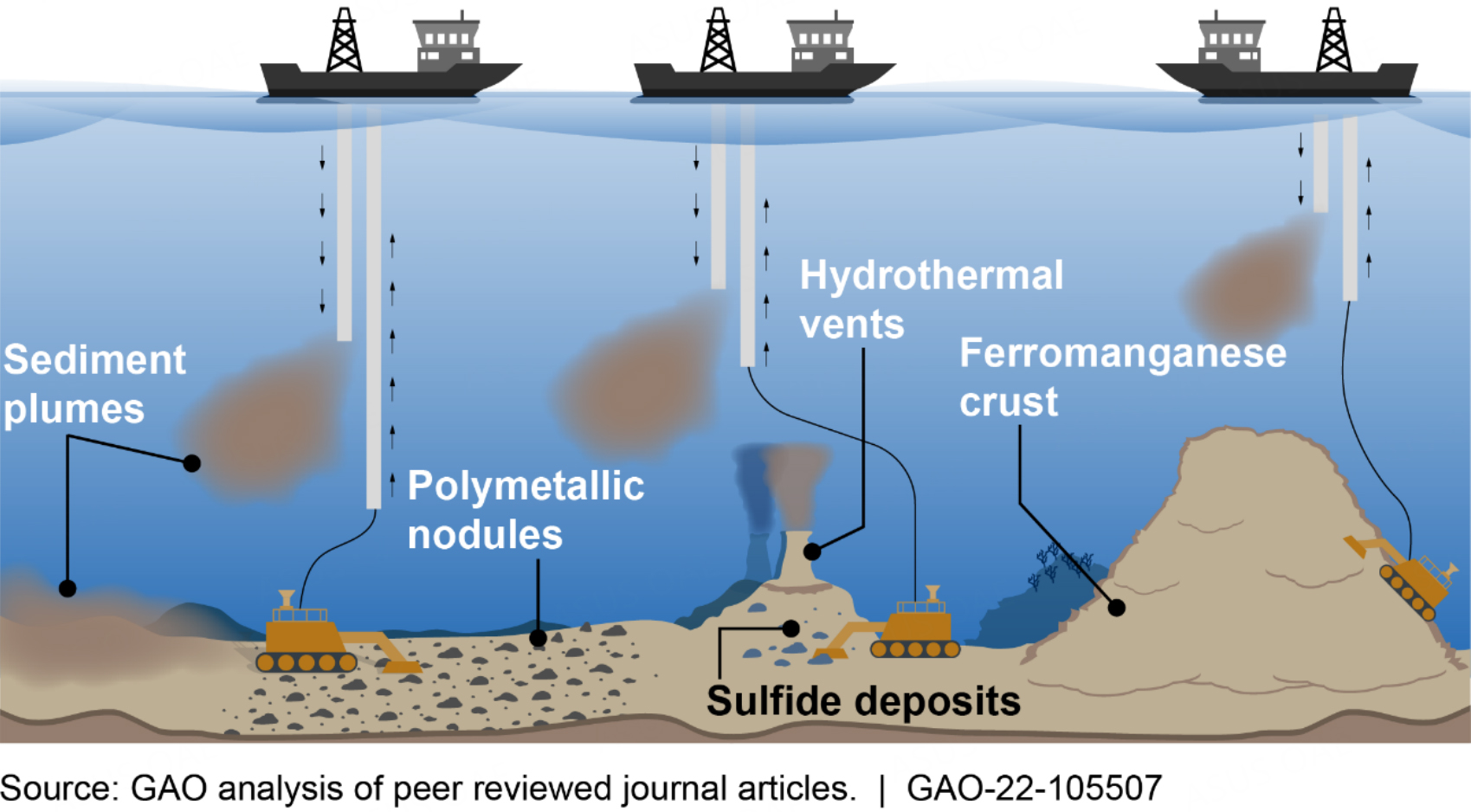
Found on the ocean floor, these nodules contain valuable metals such as manganese, nickel, copper and cobalt. These resources are essential for modern technologies including batteries, renewable energy systems and electronics manufacturing. Strategic exploration and partnerships could position Akwa Ibom as a future player in the global critical minerals supply chain.
Rare Earth Minerals
Rare earth elements are indispensable in advanced manufacturing, defense systems, telecommunications and green technologies such as wind turbines and electric vehicles. The exploration of deep offshore sediments may reveal deposits that could attract international investment and technological collaboration.
Deep-Sea Mining Opportunities
Though still emerging globally, deep-sea mining represents a frontier sector with enormous economic potential. With proper environmental safeguards, regulatory frameworks and scientific research partnerships, Akwa Ibom could pioneer responsible exploration of seabed mineral wealth in Nigeria and the West African sub-region.
The Case for Institutional Coordination
The absence of a centralized institution dedicated to blue economy governance limits the state’s ability to systematically harness these resources. Currently, responsibilities are fragmented across multiple agencies, resulting in inefficiencies, weak enforcement of environmental standards and missed investment opportunities.
A Ministry of Blue Economy would serve as a coordinating hub for:
- Resource mapping and marine geological surveys
- Environmental protection and sustainable exploitation policies
- Investment promotion and public-private partnerships
- Research collaboration with universities and international bodies
- Development of coastal industrial zones and processing hubs
- Economic and Social Implications
The establishment of such a ministry would not only diversify the state’s revenue base but also create thousands of direct and indirect jobs in exploration, extraction, processing, logistics and environmental management. It would stimulate the growth of ancillary industries such as shipping services, engineering, fabrication and maritime security.
Furthermore, it would enhance Akwa Ibom’s competitiveness within Nigeria’s emerging blue economy framework, aligning the state with global trends in sustainable ocean resource utilization.
The seabed and marine mineral resources of Akwa Ibom State represent an untapped reservoir of wealth capable of transforming the economic landscape of the state if strategically harnessed. The vision of establishing a Ministry of Blue Economy is therefore not merely administrative, it is transformational.
With the continued leadership of Governor Umo Eno and the foundation already being laid through ongoing development initiatives, Akwa Ibom stands at the threshold of a new economic era. A deliberate shift toward blue economy governance will ensure that the state not only participates in but leads the emerging ocean-based economic revolution in Nigeria. The time to act is now.
Dr Saviour Ekpe is a Journalist, public analyst, scholar and the National Secretary, Energy and Maritime Reporters of Nigeria (EMR), could be reached through +2348024179119