NEWSFRONT EDITORIAL
At a time when Nigeria is grappling with graduate unemployment, inadequate practical skills and the widening gap between education and productivity, institutions that seek to translate academic knowledge into practical solutions deserve recognition and encouragement.
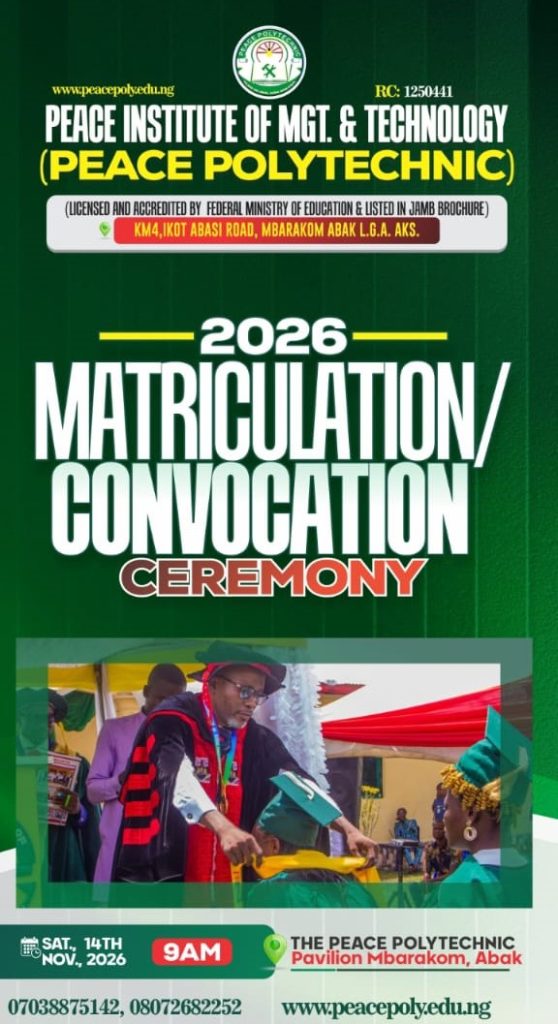
This is why the forthcoming 2026 Combined Matriculation and Convocation Ceremony of Peace Polytechnic, Mbarakom, Abak, Akwa Ibom State, deserves more than ordinary attention. Scheduled for Saturday, November 14, 2026, the ceremony is anchored on the theme, “Transforming Education into Productivity: Human Capital Development for National Development.” The theme speaks directly to one of Nigeria’s greatest development challenges: how to make education relevant to the needs of society and the economy.
Education must go beyond the acquisition of certificates. It must produce individuals with the skills, creativity and entrepreneurial capacity to create employment, solve problems and contribute meaningfully to national development. Perhaps the most remarkable feature of this year’s ceremony is the unveiling of a Biogas Digester System. This initiative is particularly commendable because it demonstrates the practical application of scientific knowledge in addressing real societal challenges. At a time when Nigeria faces energy shortages and environmental concerns, converting organic waste into usable energy is an innovation worthy of encouragement.
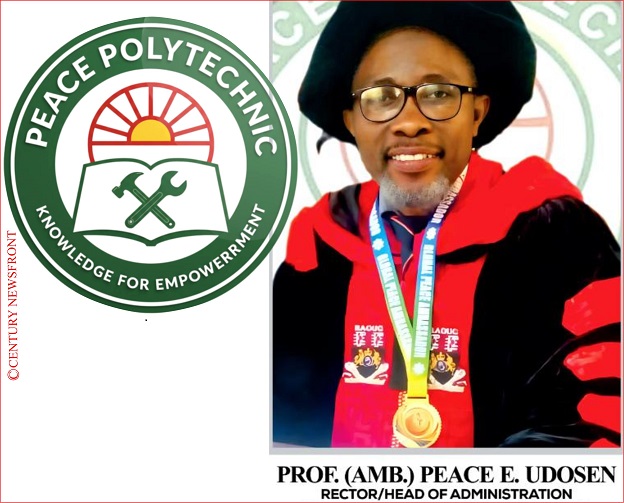
It is gratifying that Peace Polytechnic is demonstrating that educational institutions can become centres of innovation and practical problem-solving rather than merely places where certificates are awarded. We commend the leadership of Prof. (Amb.) Peace E. Udosen, Rector and Head of Administration, for sustaining an educational vision that emphasises practical knowledge, technological innovation and human capital development. The participation of His Royal Highness, Dr. Ifiok Umanah Mkpokporo VII, JP, as Royal Guest Lecturer also highlights the important relationship between traditional institutions, education and community development.
We equally recognise the institution’s efforts to expand access to higher education through partnerships and professional programmes. Such initiatives, subject to appropriate regulatory standards, can help widen educational opportunities. However, commendation must go alongside a call for sustained commitment. Government, corporate organisations and other stakeholders should support institutions pursuing practical research and technological advancement be it public or private. The biogas initiative should not end as a ceremonial exhibition but should be sustained, improved and developed into a model of applied research that benefits the wider community.
To the graduating students, we say congratulations. Their certificates should represent not merely academic accomplishments but the beginning of greater responsibilities to society. To the newly admitted students, matriculation should mark the beginning of discipline, innovation and purposeful learning. As Peace Polytechnic prepares for these important occasions, the public should see beyond the ceremony to the larger message it represents.
Nigeria does not need certificates alone; it needs education that produces skills, creates opportunities, encourages innovation and drives development. Peace Polytechnic deserves commendation for embracing this philosophy. Its responsibility now is to sustain the vision and translate its innovations into lasting benefits for students, communities and the nation. That is the true meaning of transforming education into productivity.