
By Josephine Ekpa
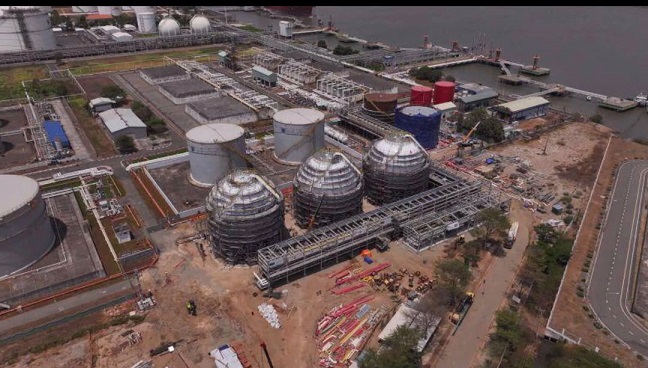
Nigeria’s drive to expand domestic gas utilisation has received a fresh boost with the mechanical completion of Asiko Energy Holdings Limited’s 5,000-metric-tonne fully mounded LPG and propane terminal in Ijora, Lagos.
The first phase of the project was marked on September 29, 2026, bringing together industry stakeholders and project partners. Asiko Energy says the facility is designed to strengthen the link between Nigeria’s coastal gas supply infrastructure and inland storage and distribution networks.
One of the project’s notable features is its connection to the Apapa port area through an underground pipeline system extending about 1.7 kilometres to three jetty connection points. This infrastructure is intended to give the terminal greater flexibility in receiving LPG cargoes through multiple access points.
Asiko Energy Managing Director and CEO, Felix Ekundayo, said the terminal has been designed to receive different grades of LPG, including supplies that can be blended to meet domestic specifications. The company expects its first gas cargo in November 2026, with Nigeria LNG Limited and other suppliers identified among potential sources.
The development comes at a time when infrastructure remains a major issue for Nigeria’s gas market.
Speaking at the completion ceremony, NLNG Managing Director and CEO Adeleye Falade said Nigeria possesses substantial gas resources but continues to face infrastructure constraints that limit the conversion of those resources into greater domestic energy access. NLNG has also maintained domestic LPG supply, with the company saying its output has grown substantially as national demand has expanded.
For consumers, the potential impact is particularly relevant. Asiko says its ability to access and blend different LPG supplies could help reduce the cost of cooking gas. That is a company projection, however, and the actual effect on retail prices will depend on supply costs, logistics, market conditions and distribution.
The project also extends beyond its first phase. Asiko says its wider vision includes additional LPG infrastructure and a planned 30,000-cubic-metre fully contained LNG terminal, with development scheduled to commence in 2027.
The significance of the Ijora project therefore goes beyond storage capacity. It highlights a central issue in Nigeria’s gas economy: having abundant gas resources is only one part of the equation; infrastructure is needed to move, store, process and deliver that gas efficiently.
As Nigeria continues to pursue greater domestic gas utilisation, projects such as this will be watched closely for how effectively investment in infrastructure translates into reliable supply and broader access to gas.
Infrastructure remains the bridge between Nigeria’s gas resources and the economic value they can deliver.