Newsfront Online Newsfront Online

With Saviour Ekpe, Ph.D
The signing of the Electricity Act 2023 by President Bola Ahmed Tinubu on June 9, 2023, marked a significant turning point in Nigeria’s power sector. For the first time, states have been granted the authority to generate, transmit, distribute and regulate electricity within their jurisdictions, creating an unprecedented opportunity for state governments to address energy challenges and drive economic growth.
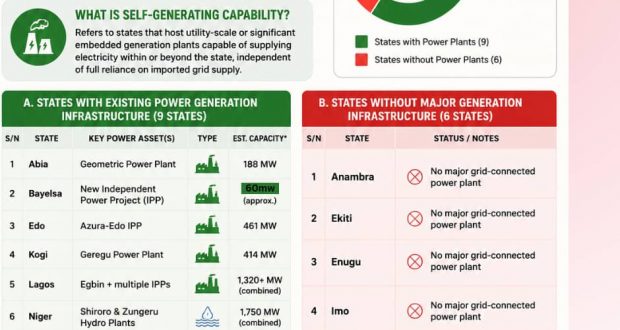
Recent assessments of states that have established electricity market oversight reveal a sobering reality. As 15 states have taken steps to create regulatory frameworks for their electricity markets, only nine currently possess identifiable power generation infrastructure capable of supporting self-generating capacity while the remaining 13 states including Abuja are out of the picture in the interim. This development underscores a critical lesson; regulatory autonomy alone is insufficient. States that combine regulation with actual power generation assets are better positioned to guarantee energy security, attract investments and stimulate economic development.
For Akwa Ibom State, this reality presents both a challenge and an opportunity. Despite its status as one of Nigeria’s leading oil-producing states and a major contributor to the nation’s economy, Akwa Ibom continues to grapple with electricity supply challenges that constrain businesses, discourage industrial expansion and increase the cost of doing business. Small and medium-scale enterprises spend substantial portions of their operating budgets on diesel and petrol generators, while larger industries contend with unreliable grid power that affects productivity and competitiveness.
The Electricity Act 2023 provides the legal foundation for Akwa Ibom State to chart a different course. Under the leadership of Pastor Umo Eno, the state has consistently pursued economic development through the ARISE Agenda, which emphasizes agricultural revolution, rural development, infrastructure maintenance and advancement, security management and educational advancement. Reliable electricity remains a critical enabler for the successful realization of these objectives.
The time has therefore come for the Akwa Ibom State Government to take deliberate steps toward developing and strengthening the Ibom Power Company as a strategic instrument for energy independence and economic transformation. Ibom Power already represents one of the state’s most important investments in power generation. However, the changing regulatory environment demands a renewed vision and expanded capacity. With the authority now available to states, Akwa Ibom can pursue investments in additional generation facilities, transmission infrastructure, renewable energy projects and distribution networks that will ensure electricity reaches homes, businesses and industries more efficiently.
A robust and expanded Ibom Power Company would provide multiple benefits. First, it would improve power supply reliability across the state, reducing dependence on costly self-generation by businesses and households. Second, it would attract investors seeking locations with stable energy infrastructure. Third, it would support industrialization efforts, particularly in manufacturing, agro-processing and technology-driven enterprises. Fourth, it would create jobs through infrastructure development and operational activities within the power value chain.
Beyond economic considerations, enhanced electricity access would improve healthcare delivery, educational services and the overall quality of life for residents. Rural communities would also benefit from targeted electrification programmes that support agricultural processing, storage and value addition, thereby contributing to the state’s broader development goals. Several states are already positioning themselves to leverage the opportunities created by the Electricity Act. Akwa Ibom cannot afford to remain on the sidelines while others strengthen their energy capacities and attract investments that could otherwise come to the state.
The administration of Pastor Umo Eno has demonstrated commitment to infrastructure development and economic growth. The next logical step is to prioritize power sector expansion through a comprehensive strategy that strengthens Ibom Power, encourages private-sector participation and creates a sustainable state electricity market capable of meeting present and future demands. Electricity is no longer merely a utility; it is the foundation upon which modern economies are built. As Nigeria’s electricity sector becomes increasingly decentralized, states that act decisively today will enjoy significant competitive advantages tomorrow.
Akwa Ibom possesses the resources, the institutional framework and the leadership required to become a regional power hub. The opportunity created by the Electricity Act 2023 should therefore be embraced with urgency. By expanding and repositioning Ibom Power Company, the state can address longstanding power challenges, empower businesses, attract investments and accelerate the economic aspirations embodied in the ARISE Agenda. The future of Akwa Ibom’s economy may well depend on how effectively it harnesses this historic opportunity.
Dr Saviour Ekpe is a journalist, public analyst and scholar. He is based in Uyo, the Akwa Ibom State capital