Newsfront Online Newsfront Online

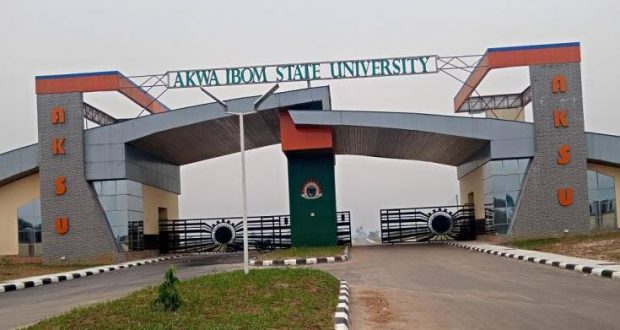
The planned commencement of the Akwa Ibom State University of Education (AKSUE) in September, 2026 by the leadership of Governor Umo Bassey Eno, Ph.D the Executive Governor of Akwa Ibom State is a landmark development that deserves the support, commendation and accolades of all stakeholders in the education sector. The transition from a College of Education to a specialized university is not merely a change in nomenclature. It is the beginning of a new chapter that carries enormous expectations for academic excellence, research, innovation and the production of quality manpower for the state and the nation.
At moments such as this, Century Newsfront is of the opinion that attention naturally, should shift to questions of leadership not on trivial issues. Yet the debate should not be driven by personalities, sectional interests or competing camps. The real issue is what kind of leadership is required to successfully navigate the delicate transition from a college to a university and position the institution for national and international relevance and to meet up with the arise agenda of the present administration.
History has shown that institutions undergoing major transformation require more than administrative leadership. They require vision, stability, institutional memory and a clear understanding of where the institution is coming from and where it is heading for. The formative years of any university are often decisive. The policies adopted, the priorities established and the culture nurtured during this period can shape the institution’s trajectory for decades.
For this reason, merit, experience and proven performance must remain the primary considerations in determining who should guide the affairs of the new university. This is not a time for experimentation. Neither is it a time to discard valuable institutional experience in favour of considerations that have little bearing on the future of the institution.
The evolution of the institution in recent years offers useful insights into what effective leadership can achieve. Significant improvements were recorded in infrastructure, administration and service delivery. Academic activities were strengthened, governance structures improved and efforts were made to modernize institutional operations. These developments were not accidental. They were the product of deliberate policies and purposeful leadership.
One of the notable achievements during this period was the establishment of a JAMB Computer-Based Test Centre within the institution. The facility provided opportunities for thousands of candidates and contributed to expanding access to computer-based examinations in Akwa Ibom State. Its impact became particularly evident when challenges emerged in the conduct of the 2026 Unified Tertiary Matriculation Examination. Many parents and candidates encountered difficulties securing examination centres within convenient locations. Some candidates were compelled to travel to neighbouring states to write examinations after available spaces had been exhausted. For families already burdened by economic realities, such experiences represented additional financial and emotional strain.
The lesson is clear. Educational infrastructure matters. Institutions that anticipate future needs and invest in facilities that support learning and assessment contribute not only to their immediate communities but also to the broader educational development of society. Leadership that recognizes such needs and responds proactively deserves recognition.
The institution also witnessed efforts aimed at improving administrative efficiency through greater application of technology and modern management practices. Transparency and accountability received attention while governance processes became more structured. Such reforms are indispensable in contemporary higher education where universities are increasingly judged not only by academic output but also by the quality of their administration.
Equally significant were interventions aimed at resolving challenges that had affected graduates over the years. The clearance of outstanding certificate issues restored confidence among former students and enhanced the reputation of the institution. Infrastructure development, improved welfare initiatives and efforts to maintain academic stability further contributed to institutional growth.
As the state prepares for the formal take-off of the university, Century Newsfront believes that it is important that these achievements are not viewed in isolation. They represent building blocks upon which the future university must stand. The objective should not simply be to inaugurate a new institution but to create a university capable of competing with the best within and beyond Nigeria.
Achieving this goal requires continuity of good ideas, preservation of institutional memory and a commitment to rewarding proven performance. The temptation to overlook competence in favour of other considerations must be discouraged. The stakes are too high. The future of thousands of students, members of staff and generations yet unborn depends on the decisions being taken today.
It is therefore only reasonable that those charged with the responsibility of selecting the substantive leadership of the university should pay close attention to demonstrated capacity and measurable results. The records of those who have previously managed the institution should be objectively assessed, not through the lens of sentiment or personal preference but through the evidence of what was achieved under their stewardship.
Viewed from this perspective, the accomplishments recorded under the immediate past Provost, Professor Daniel Udo, present a compelling case for serious consideration. Whether in infrastructure development, institutional reforms, expansion of educational opportunities or administrative modernization, there is sufficient evidence to suggest that continuity of such leadership experience could be beneficial to the successful take-off and growth of the new university.
The emergence of the Akwa Ibom State University of Education presents a rare opportunity to establish a model institution that will serve generations to come. Such an opportunity should be guided by wisdom, merit and a commitment to excellence. The future of the university must be built on what works and those who have demonstrated the capacity to deliver results should not be ignored in the process.