Newsfront Online Newsfront Online

Saviour Ekpe, Ph.D
Akwa Ibom State occupies a strategic position in Nigeria’s maritime and oil-producing region. Yet, despite being one of the country’s major oil-producing states, it has not fully harnessed the economic opportunities that should naturally accompany its status. A significant reason for this is the absence of adequate jetty and warehouse infrastructure capable of supporting the operations of International Oil Companies (IOCs) and marine logistics service providers.
Today, many IOCs operating within or around Akwa Ibom maintain their major operational bases in Port Harcourt and Lagos. Their equipment, offshore supplies and logistics materials are stored in warehouses located in those cities before being transported by vessels to offshore platforms. This arrangement, though functional, is neither the most economical nor the most efficient for operations connected to Akwa Ibom’s maritime environment.
The reality is that several offshore installations serving the region can be reached much faster from Akwa Ibom than from Port Harcourt. While vessels may spend between eight to ten hours transporting equipment from warehouses in Port Harcourt to some offshore platforms, the same journey could take as little as three or four hours if the equipment were dispatched from a modern jetty in Akwa Ibom. The shorter sailing distance translates into lower fuel consumption, reduced vessel operating costs, quicker turnaround time, improved emergency response and greater operational efficiency.
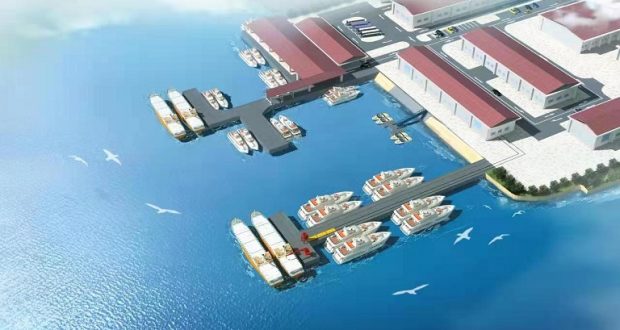
This geographical advantage presents Akwa Ibom with a unique opportunity. What is required is the deliberate creation of an enabling environment that encourages private investors to establish world-class jetties and warehouse complexes. Government does not necessarily have to own or operate these facilities. Rather, it should provide the necessary infrastructure, policy support, security and investment incentives that will attract credible investors into the sector.
Once modern jetties and warehouses become available, International Oil Companies and marine logistics firms will naturally find Akwa Ibom a more attractive operational base. Equipment that is presently stored in Lagos and Port Harcourt can gradually be relocated to Akwa Ibom. Logistics companies will establish operational offices close to the jetties, while support services such as vessel management, fabrication, equipment maintenance, marine engineering, freight forwarding, security services and supply-chain businesses will also flourish.
The economic benefits of such development would be enormous. Thousands of direct and indirect jobs would be created for engineers, technicians, warehouse operators, seafarers, transporters, security personnel, artisans and numerous other professionals. Local businesses, including hotels, restaurants, banks, transport operators and retail outlets, would experience increased patronage. The state would also benefit through higher internally generated revenue, increased investments and a stronger local economy.
Communities hosting these facilities would equally experience positive transformation. Improved road infrastructure, better electricity supply, enhanced security and increased commercial activities would naturally follow major industrial investments. Young people would have greater employment opportunities, reducing unemployment and promoting social stability.
For the oil companies themselves, the advantages are equally compelling. Shorter travel distances to offshore locations mean lower operating costs, improved logistics planning, faster delivery of critical equipment, reduced downtime and greater efficiency in offshore operations. In an industry where time and operational reliability directly affect profitability, proximity to offshore assets is a significant competitive advantage.
The administration of Governor Umo Eno has already demonstrated commitment to infrastructure development through the ongoing construction and rehabilitation of roads across the state. This commendable effort provides a solid foundation upon which other strategic infrastructure can be built. The next logical step is to facilitate the development of modern jetties and industrial warehouse hubs that will support maritime commerce and offshore logistics.
Akwa Ibom possesses the location, the coastline, the human capacity and the natural resources to become Nigeria’s preferred hub for offshore oil and gas logistics. What remains is the deliberate pursuit of policies that encourage private investment in marine infrastructure.
The future of Akwa Ibom’s economy should not depend solely on the production of crude oil, but on the countless economic opportunities that arise from servicing the oil and gas industry. By promoting the development of modern jetties and warehouses, the state will attract investments, encourage the relocation of logistics operations, create sustainable employment, expand its revenue base and firmly establish itself as a leading maritime and industrial hub in Nigeria.